Resources
Originally published in Turning to Peace .....
If you've been around betrayal recovery long, you are probably familiar with check-ins as they are one the most recommended tools in couples recovery. Check-ins are intended to be a consistent way to connect and share with your partner while rebuilding a safe space together. But despite the wealth of check-in options, I always felt something was missing. They just didn’t consistently help me bolster safety. This led me to explore what additional components would strengthen safety and stability in my own recovering relationship and others like it. What would truly help couples dive deeper into foundational heart issues?
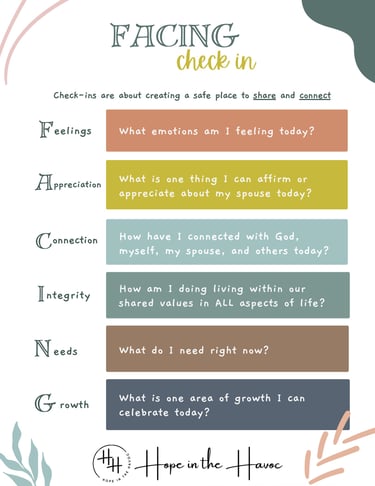
The result is the FACING (Feelings, Appreciation, Connection, Integrity, Needs, and Growth) Check-in. This features questions meant to provide both an opportunity for self-reflection and a time to listen and share. When used as a couple’s recovery tool, both partners need to be in active recovery. If you are no longer in a relationship, these questions can also be used as a tool for introspection.
Feelings- What emotions am I feeling today?
Appreciation- What is one thing I can affirm or appreciate about my spouse today?
Connection- How have I connected with God, myself, my spouse, and others today?
Integrity- How am I doing living within our shared values in ALL aspects of life?
Needs- What do I need right now?
Growth- What is one area of growth I can celebrate today?
Feelings are frequently discussed in recovery circles as both the betrayed and betrayer often struggle with recognizing and articulating feelings and emotions. A feelings wheel can be especially helpful when starting to learn this new skill. Remember, both positive and negative emotions are healthy to share, and while feelings aren’t facts, they are helpful indicators of what we are experiencing. You may feel very vulnerable at first as you share the depth of your emotions, but this is a vital step in recovery. Dig deep and explore what you’re truly experiencing under the surface.
Appreciation can be especially challenging at the beginning of recovery. It’s okay to start off small. Much like a gratitude journal, appreciation and affirmations can make a big difference in perspective. Being appreciated can make both parties feel seen and encouraged in their recovery journey.
Connection is the opposite of addiction. God designed us for real connection and community. Trauma damages the betrayed’s and betrayer’s capacity to connect, and yet community is indispensable for lasting healing. Be intentional about how you connect with yourself, one another, others, and God.
Integrity is living within shared values and beliefs and serves as the foundation of recovery. Other check-in tools often focus on sobriety, and while sobriety is an essential starting point in recovery, it is not the end goal. A sobriety date is merely a data point, while integrity is a matter of the heart.
Needs can be tough to voice out loud for the betrayed and the betrayer. Oftentimes, it can feel vulnerable to share even the most basic needs. Use this moment to intentionally invite your partner to share priorities, struggles, and requests, whether or not they are recovery related.
Growth is often easy to overlook or minimize. Don’t! Instead, slow down and remember how you grew over the last week, month, and year. You’ll be encouraged to see and know you are continually moving forward and not staying stagnant. This is important for both partners. Celebrate your wins together!
Couples recovery work is intended to foster a lasting connection by working together to rebuild a safe place where you each can be truly seen and known. I created the FACING tool as a resource couples can add to their toolbox, but it’s just a tool. It cannot create safety by itself. Our hope is not in these tools, our partners, or even our relationships- our hope is in God who can truly heal.
May the God of hope fill you with all joy and peace in believing, so that by the power of the Holy Spirit you may abound in hope. Romans 15:13
To download a PDF of the FACING Check-in, along with some helpful tips, please visit HopeintheHavoc.com/resources.
FACING a New Check-in
strengthening safety and diving deeper into connection
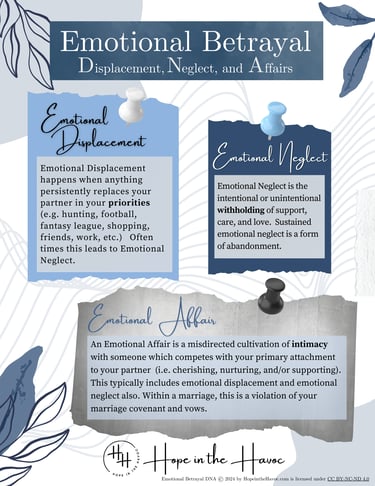
What is an emotional affair? This is such an important but difficult topic! I have been working to create clear and concise definitions for Emotional Betrayal and am so excited to be able to share it with you now! Clink the link below to download your free copy of Emotional Betrayal DNA definitions.
Emotional Betrayal DNA
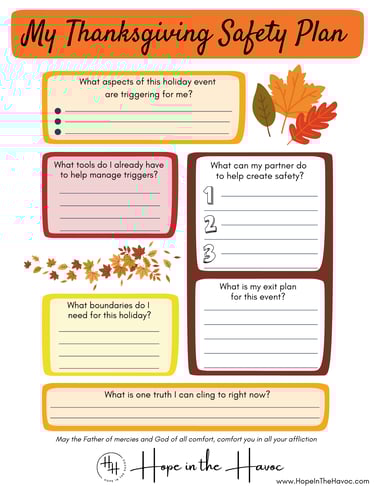
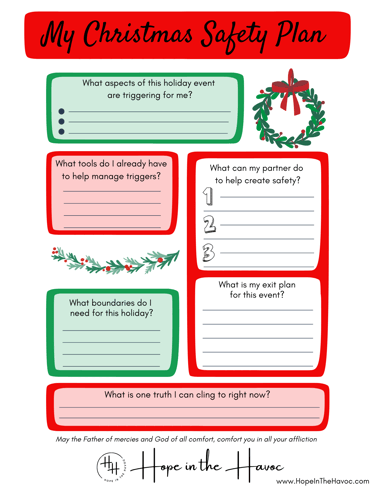
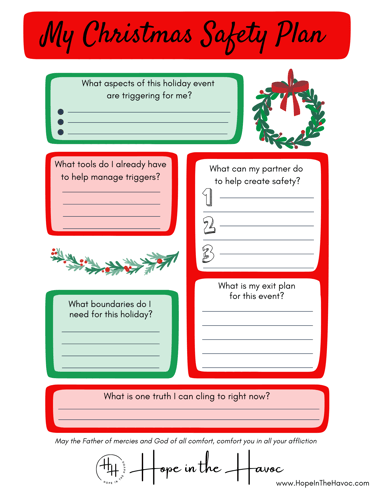
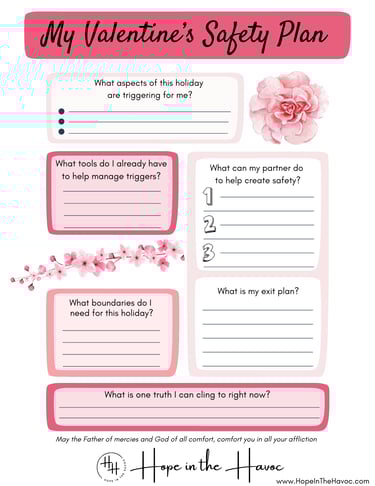
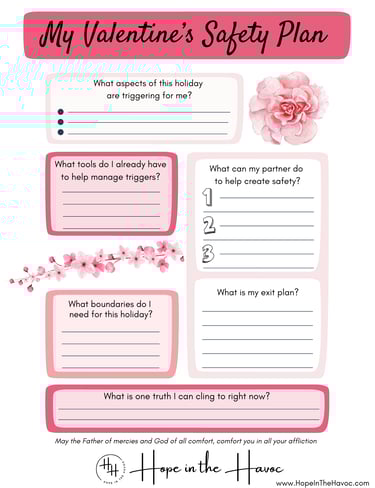
I’m very excited to announce our free Holiday Safety Plans worksheet! Are you struggling with the upcoming holidays? Do you feel triggered and overwhelmed? Click the link below for your free download.
Holiday Safety Plan
“Couples recovery work is intended to foster a lasting connection by working together to rebuild a safe place where you each can be truly seen and known."
Pool, J. (2025, March). FACING a New Check-In: Strengthening safety and diving deeper into connection, (3), 14–15.
"The reality is that betrayal is traumatic because our most intimate relationship has been broken—and that is devastating regardless of the method of betrayal."
Pool, J. (2025, April). Emotional Betrayal DNA: moving from confusion to clarity. Turning to Peace , (4), 12-13.
Articles